Situations
Left, right, centre: the dice game for the whole holiday table
No decisions, no strategy, and somehow the loudest game of the night.
· 5 min read
Why a game with no decisions works
The left-right-centre dice game is a fixture of holiday tables for a simple reason: nobody can be bad at it. There are no choices to make. A seven-year-old and their great-grandmother are exactly as likely to win, and the game swings so wildly that the person down to their last chip regularly ends up holding the pot.
Pass the Chips is PartyDen's version, with its own name and dice faces, played on phones so there are no chips to find, no dice rolling under the sofa, and nobody has to explain the rules twice.
The rules in four lines
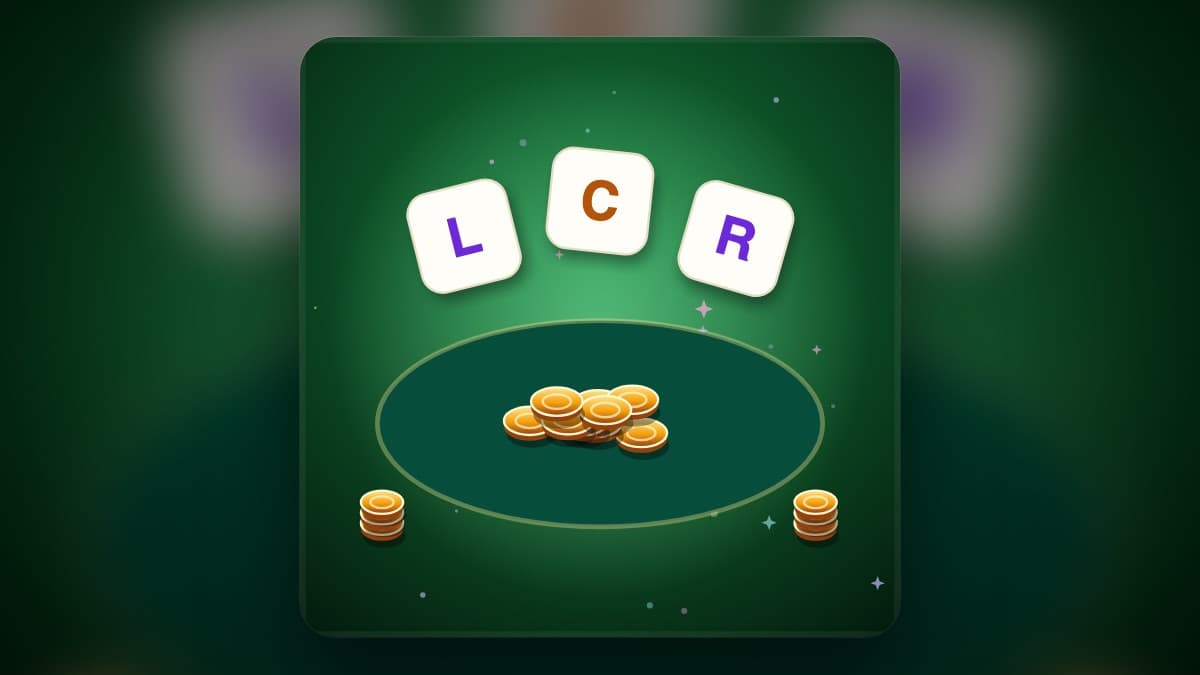
Everyone starts with three chips. On your turn you roll one die for each chip you hold, up to three dice. Each die has an L, a C, an R and three dots: every L sends a chip to the player on your left, every R to the player on your right, every C into the pot in the middle, and every dot lets you keep that chip.
If you have no chips, you do not roll — but you are not out. Your neighbours will probably roll a chip back to you. The game ends when only one player is still holding chips, and they win the game and the pot.
| Face | On the die | What happens |
|---|---|---|
| L | One face | Pass a chip to your left |
| R | One face | Pass a chip to your right |
| C | One face | Put a chip in the pot |
| Dot | Three faces | Keep the chip |
Chips, not money
At many family tables this game is played with coins or dollar bills. Pass the Chips is points and nothing else: no money changes hands, nothing is bought or won, and the chips exist only on the scoreboard. That keeps it a game for every age and every table, and it keeps it on the right side of the line between a party game and gambling.
Small changes that suit your table
Three chips each is the classic start and gives a game of about ten minutes for a big family. With only four or five players, start with four or five chips so the game lasts long enough to swing. With twenty people, two chips each keeps it quick enough to play twice before dessert.
A best-of-three works well when the whole family is in one room: the pot from each game is a winner's score, the leaderboard keeps the running total, and the person who won the most pots takes the evening. Rotate who starts each game, which the app does for you, so nobody gets the first roll every time.
Running it for a family gathering
Everyone joins the room from the invite link on their own phone — three people, or twenty. The app rolls, moves every chip and says in words where each one went ("two to Maya, one to the pot"), so nobody has to count. A turn has a short clock; if somebody is busy carving, the app rolls for them.
A game takes five to fifteen minutes, which makes it the right thing to play while dinner finishes, or three times in a row for a best-of-three. For a group that wants a little more to do, Party Bingo turns the party itself into a bingo card, Don't Bust adds one decision per turn, and Tambola is the classic for a big family that likes a caller.
Questions people ask
How many chips do you start with?
Three each by default. The host can set two to six.
What happens when you run out of chips?
You skip your rolls but stay in the game, because a neighbour can roll a chip back to you.
Who wins left-right-centre?
The last player still holding any chips. In Pass the Chips they also take the pot, as points.
Is it gambling?
Not on PartyDen. The chips are points on a leaderboard; nothing is staked, bought or won.
The games in this post
Pass the Chips
Three chips each, three dice, no decisions: pass left, pass right, lose one to the pot. Last one with chips wins.
- Quick
- Call friendly
Tambola
Housie with auto-called numbers and instant claim checks.
- Call friendly
- High energy
Party Bingo
Bingo for the party itself: tap the gift, the toast or the ad when it happens, and race to a line.
- Call friendly
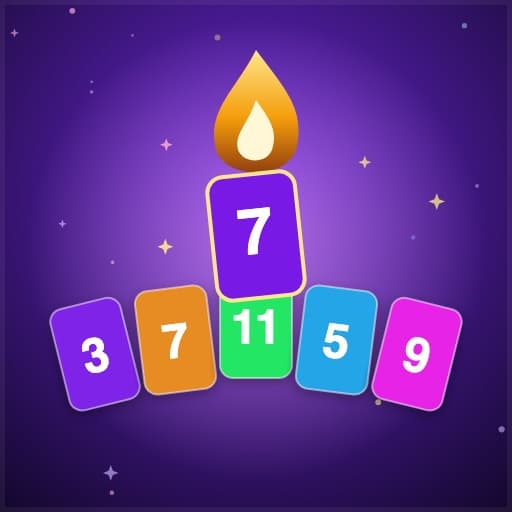
Don't Bust
Flip a card or stay. A number you already hold busts your round. Seven different numbers and everyone stops.
- Call friendly
- High energy
More like these on Christmas Party Games.
Free tools for these games
Ready to try it?
Start a room in a few taps. No account, nothing to install.