Situations
Wedding function games for the sangeet, mehndi and haldi
Every wedding function has a forty-minute gap. Here is what to put in it.
· 8 min read

Every function has a gap
An Indian wedding is a run of events with long waits inside them. The mehndi artist needs three hours for the bride's hands and an hour for everyone else's. The sangeet waits between performances while the next group changes. The haldi has a slow half hour before anyone is allowed to get messy. In each of those gaps, two hundred guests stand around, the elders sit in a row along one wall, and the cousins vanish into their phones.
A game fills the gap, but only if it fits the function. Each one has a different constraint: wet hands at the mehndi, a stage and a microphone at the sangeet, turmeric everywhere at the haldi. The guide below matches each one to games that work within it, and most of them need nothing but the phones people are already holding.
| Function | The constraint | What to play |
|---|---|---|
| Mehndi | Wet hands, sitting still for hours | Antakshari, Dumb Charades with dry-handed actors |
| Sangeet | A stage, a mic, gaps between dances | A couple quiz, the shoe game |
| Haldi | Turmeric, daylight, nobody near a phone | Physical games, then Tambola in the shade |
| Reception or after-party | Mixed ages, people coming and going | Wedding bingo, Tambola |
Mehndi: games for people who cannot use their hands
At the mehndi, half the guests are sitting with wet henna on both hands for an hour or more. They are bored and they cannot hold a phone. So the right game is one that needs only a voice.
Antakshari is the obvious choice and it is obvious for a reason. Split the room into the bride's side and the groom's side. Have everyone join PartyDen's Antakshari before the henna goes on; after that the game needs nothing but voices. The app shows the letter, keeps the clock and tracks whose turn it is, and a television can show the letter to the whole room. When a song is disputed, a cousin with dry hands — the host — can simply award it. Hindi or English letters, and the host decides how many songs make a round.
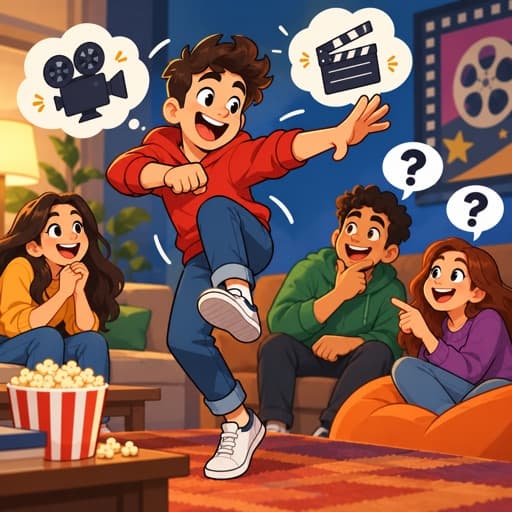
For a change of pace, Dumb Charades works if the actors are the ones whose mehndi is done or not yet started: the people with wet hands guess, which is the job that needs no hands at all. Put wedding words in as your own things to act out: "joota chupai", "the baraat is late", "the photographer says one more", "the bride's mother crying".
Sangeet: the couple quiz
The sangeet's best game is the one about the couple. The classic version is the shoe game: the bride and groom sit back to back, each holding one of their own shoes and one of their partner's. The host asks questions — who is the better cook? who said "I love you" first? who takes longer to get ready? — and each raises the shoe of the person they think it is. It needs no phone and plays well from a stage, and it is worth doing.
The phone version lets the whole room play rather than watch. Who Knows Best? has a pack called The couple, and the host can switch on "All about one person" so that every question is about the bride, or the groom, or both in turn. The subject answers each question in secret on their phone; every guest guesses on theirs; the answer is revealed and the guests who knew it score. By the end, you know which friend from college knows the bride better than her own mother — and so does everyone else.
Run it between two performances for about fifteen minutes, and let the couple react to the results on the microphone. That is a sangeet segment that took no rehearsal.
Haldi: put the phones away
The haldi is the one function where phones are a bad idea, because everyone is about to be covered in turmeric. Play the physical games first: musical chairs with the cousins, passing a bowl of haldi around while the music plays and whoever holds it when the music stops must put a spot on the groom's cheek, or a three-legged race in the courtyard if there is space.
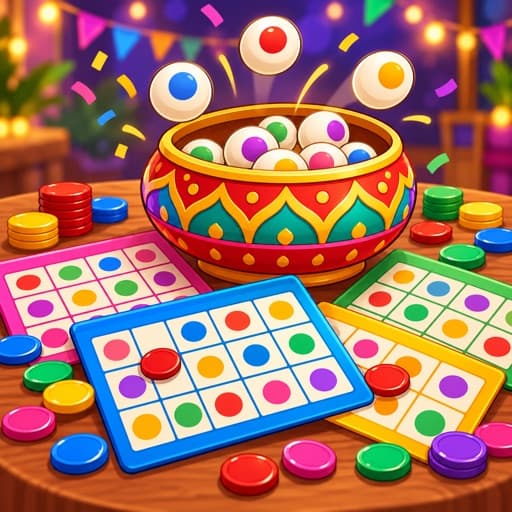
Then, once the messy part is done and people are drying off, move the elders into the shade and start a game of Tambola. It is the one game every generation at an Indian wedding already knows, it seats up to fifty, and latecomers can be given a ticket while the numbers are already being called. If you like your caller to use the traditional rhymes, the list of Tambola numbers with names is here.
Reception and after-party: wedding bingo
At the reception, the cousins need something to do while the elders form the line to greet the couple. Party Bingo has a Wedding & sangeet pack of squares that will definitely happen: an aunty drags someone onto the dance floor, someone asks "when is yours?", the groom's side and the bride's side face off, the photographer says "one more". Each guest has their own card on their phone, and whoever sees a square happen taps it for everyone, so the whole wedding becomes the caller.
It works because it needs no attention: you play it while doing everything else at the wedding, and people who arrive late can join in with a fresh card. Give a small prize for the first line — first pick of the dessert counter is popular — and a bigger one for a full card.
Making it run without the bride
One rule above all: the bride, the groom and their parents should not run any of this. Pick one organised cousin to be the games host for the whole wedding. They start each game, hold the microphone, and keep a list of who has won so the same three people do not take every prize.
Put the room code on a television or a projector screen if the venue has one, so guests can join by typing a six-character code instead of passing a link around. Keep each game short — fifteen to twenty minutes — and stop while people are still enjoying it. A game that runs into the dinner announcement will be abandoned anyway. For other big-group occasions, see the guide to a game night for twenty-five people.
Questions people ask
What games can you play at a sangeet?
A couple quiz is the highlight: the shoe game on stage, or Who Knows Best? on phones so every guest can play. Antakshari and wedding-themed Dumb Charades fill the gaps between performances.
What games work at a mehndi when guests have henna on their hands?
Voice games. Antakshari needs only singing, with one dry-handed person running it on a phone. In Dumb Charades, the people with wet hands can do the guessing.
What games are played at a haldi ceremony?
Physical games while everyone is getting messy — musical chairs, passing a haldi bowl to music — then a calmer game such as Tambola for the elders once things settle down.
Who should run the games at an Indian wedding?
One organised cousin or friend, not the couple or their parents. They start each game, hold the mic, keep each game to about fifteen minutes and spread the prizes around.
The games in this post
Who Knows Best?
One player answers about themselves in secret. Everyone else guesses. Find out who really knows the birthday girl.
- Call friendly
- High energy

Antakshari
Sing on the call — the app keeps the letter, the turn and the score.
- Call friendly
- High energy
Party Bingo
Bingo for the party itself: tap the gift, the toast or the ad when it happens, and race to a line.
- Call friendly
Tambola
Housie with auto-called numbers and instant claim checks.
- Call friendly
- High energy
Dumb Charades
Act out the movie. No words allowed!
- Call friendly
- High energy
More like these on Indian Party Games.
Free tools for these games
Ready to try it?
Start a room in a few taps. No account, nothing to install.