Situations
Office Diwali party games that include everyone
Fifty people, one TV, colleagues from six states and an hour before the trains. Plan for exactly that.
· 7 min read
An office Diwali is not a family Diwali
A family Diwali party is a room of people who already know each other's jokes. The office one is different in every way that matters for games. There are people who have sat together for six years and people who joined last month. There are colleagues from six states who grew up with different songs. There is a manager in the room, and an intern trying not to be noticed by them. And there is a hard stop, because everybody has a train to catch and a puja of their own to get to.
The usual day has a rangoli or dress-up competition in the morning, sweets after lunch, and then an hour when everybody gathers in the biggest room. That hour is what this guide is about. Whatever you play has to work for twenty to fifty people at once, with one screen, for people who do not share a first language, and without anyone having to go up on stage.
It also has to work without money. Teen patti is part of a lot of family Diwalis, and it has no place at work, where a bad night at the table becomes a story in the next appraisal. Every game below is played for points and nothing else. If the card players need somewhere to go, there is a separate guide to Diwali card games without gambling.
Tambola is the centrepiece, and it seats everyone
Tambola is the one game that can hold the whole floor at once: one room, up to fifty tickets, every ticket on its owner's phone. The host opens Present to TV on the meeting room screen, and the called numbers fill a board big enough to read from the back of the room. The TV also shows the room code with a QR code beside it, so people join by pointing a phone at the wall instead of passing a code around on a chat.
Set two things before the first number. Put the gap between numbers at ten or twelve seconds rather than six, because a big mixed room talks over the calls and nobody wants to ask for a repeat. And pick the Desi calls ("Hum do, hamare do" for 4, "Republic Day" for 26), which are what an Indian office actually shouts. Claims are checked against the numbers really called before anyone hears about them, so there is no squinting at a ticket and no awkwardness about telling the head of sales that their full house was one number short.
People will drift in from meetings. A latecomer gets a fresh ticket and plays the numbers still to come, which is exactly how a hall handles someone walking in ten calls late. There is more on settings, the TV and the person without a phone in the guide to a Diwali Tambola night, and printable tickets for anyone who would rather hold paper from the ticket generator.
A team quiz on the big screen
After Tambola the room is warm and ready to compete. Trivia plays in two, three or four teams, with the question on the TV and the answers on phones. One room holds ten phones, so for a big floor make each phone a table: the table argues, one person taps, and every point counts for the team. That arrangement is louder and better than fifty people answering in silence.
Leave every pack on. General knowledge, Bollywood, cricket and Indian GK in one quiz means every table has the round it is good at and the round it hopes nobody notices. The packs were fact-checked against cited sources before they shipped, which matters more at work than at home: nobody wants to argue with the CFO about the capital of Australia and be wrong.
Between rounds, while the scores sink in, Emoji Decode fills the gap on the same screen. A string of emoji, four choices, a film or a saying. It needs no explaining, which is the whole requirement for something played while people are getting more sweets.
Antakshari, department against department
Antakshari is the game an Indian office already knows how to play, and the one most often ruined by an argument about whose turn it is and which letter it was. The app keeps the letter, the turn, the clock and the team score; the humans sing. Two teams is the default, so it maps neatly onto a rivalry the office already has: tech against sales, the third floor against the fourth.
Pick the letter style before you start. Hindi letters suit a room that grew up on Hindi film songs; English letters are kinder to a mixed room. Whether a song counts is the room's vote, so a Tamil or Bengali song counts if the room says it does. The host has They sang it and Move on for when the vote stalls, which is the referee power you will need when someone starts a song and forgets the second line.
For the colleagues who are not in the room
Every office Diwali now has a row of faces on a laptop: the Pune team, the person on leave who logged in anyway, the client-facing team stuck on calls. Everything above works for them, because every player has their own screen and the only thing on the shared TV is the board. Put the meeting link and the room code in the same message.
If there is a Diwali address from leadership, Meeting Bingo can make it the most listened-to speech of the year. The host can add the room's own phrases before starting ("record quarter", "one family", "happy and prosperous new year") and they are mixed into everyone's cards. Use your judgement about the room, and it goes better if the speaker is in on it.
For a smaller team celebrating at its own desks, Who Wrote It? with the At Work pack is the quiet alternative: everyone writes, nobody performs, and the room learns something about the colleague who joined last month without putting them on the spot.
A sixty-minute running order
This is the order that holds a room for an hour without anyone looking at the clock. Move the times around; keep the shape, which is easy, then big, then competitive, then loud.
Prizes should be things the room can see: first pick from the sweets box, the biggest diya on the desk, a hamper item. Keep money out of it entirely. A prize everybody watched being won is worth more at an office party than one somebody has to count.
| When | Play | Who plays | What to set |
|---|---|---|---|
| First 10 minutes | Emoji Decode on the TV | Everyone, as they arrive | Every pack on; it survives people walking in |
| 10 to 35 minutes | Tambola | The whole floor, up to 50 tickets | Desi calls, 10 to 12 seconds between numbers |
| 35 to 50 minutes | Trivia in teams | One phone per table, up to ten tables | Four teams, every pack on |
| Last 10 minutes | Antakshari | Two teams, by department | Hindi or English letters, to suit the room |
The games in this post
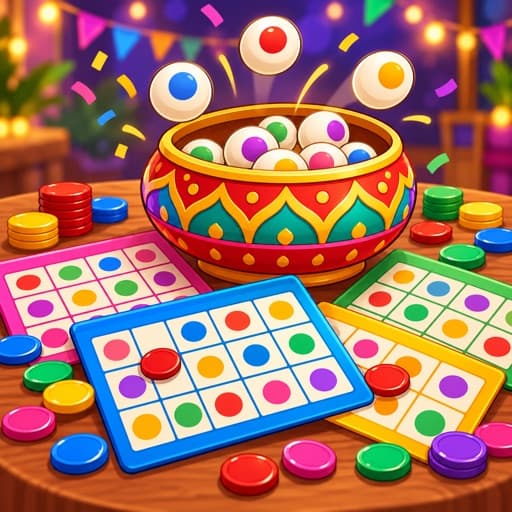
Tambola
Housie with auto-called numbers and instant claim checks.
- Call friendly
- High energy

Trivia
Race to answer questions across all topics.
- Call friendly
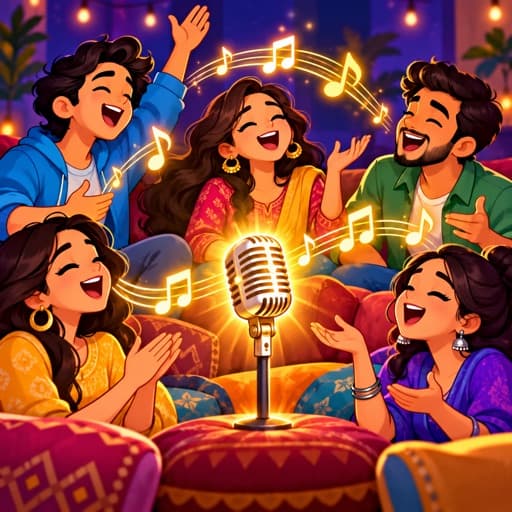
Antakshari
Sing on the call — the app keeps the letter, the turn and the score.
- Call friendly
- High energy
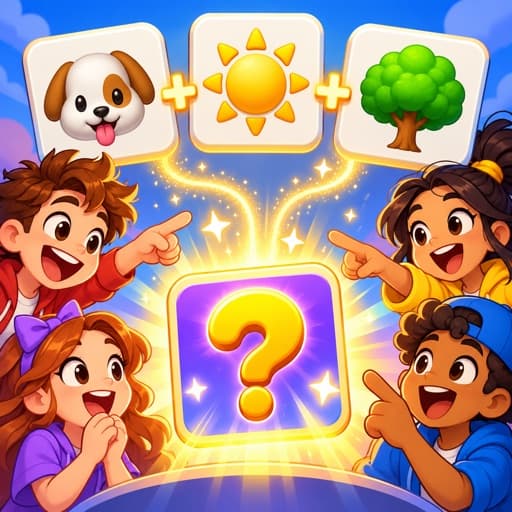
Emoji Decode
Guess the movie, show or phrase from emoji clues.
- Quick
- Call friendly

Who Wrote It?
Everyone answers a prompt about themselves. Guess which colleague wrote each answer.
- Call friendly
- High energy
Meeting Bingo
Buzzword bingo for a real meeting: tap the phrases you hear and race to a line.
- Call friendly
More like these on Office Party Games.
Free tools for these games
Ready to try it?
Start a room in a few taps. No account, nothing to install.