Party strategy
How to pick teams for party games without anyone feeling picked last
Two captains choosing turn by turn is a school playground ritual. It should stay there.
· 6 min read

Why captains choosing is the worst method
Two captains picking turn by turn is how most of us learned to make teams, and it is still how a lot of game nights start. It is also the one method guaranteed to make somebody feel bad: the last person chosen knows exactly where they stand, and so does everyone else.
It also makes worse teams. Captains pick their friends and the people they think are good, so you get one strong team and one team of everyone else, and the game is decided before it starts.
The better methods, and what each fixes
Counting off around the room, one, two, one, two, is better than captains, because nobody is chosen. It still tends to put couples on opposite sides and friends who arrived together on the same one, which may or may not be what you want.
Dealing from a shuffle is best. Shuffle the names and deal them alternately into teams, like cards. Nobody chooses, friends get split up by chance, and nobody can blame anyone for the result. The only thing to check is that no team ends up with one person; a team of one is not a team.
Games that deal the teams for you
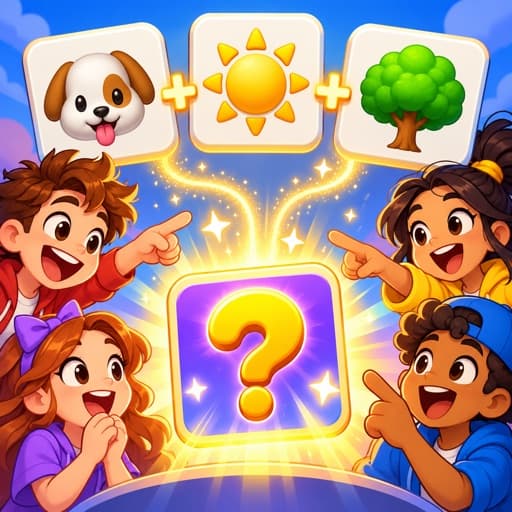
Trivia and Emoji Decode both have a teams setting: two, three or four teams, dealt alternately from a shuffled list. If there are not enough people for the number you asked for, the app makes fewer teams rather than a team of one. Everyone still answers on their own phone, and every point counts for the team as well as the player.
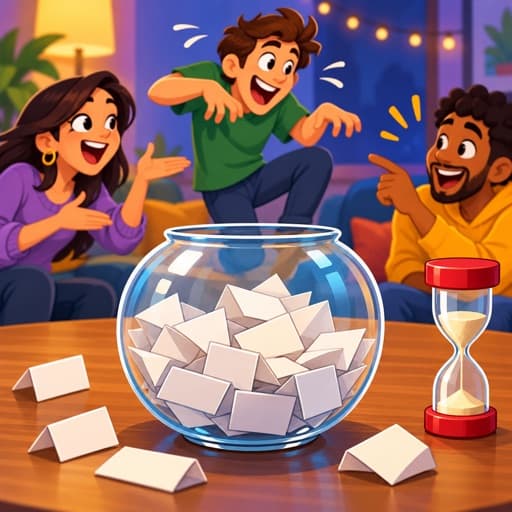
Fishbowl splits the room into two teams by alternating round the roster, which keeps the sides even as people come and go. It is the best team game there is for a big group; the Fishbowl guide explains why you should never skip the third round.
Antakshari shuffles everyone into two teams when team mode is on, which it is by default, and alternates turns between them.
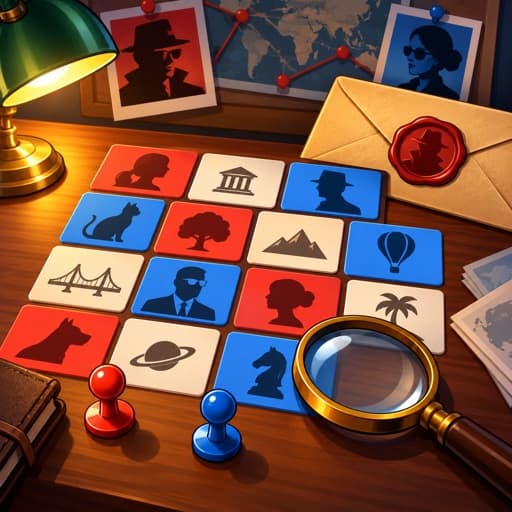
Codenames lets players pick their own teams by default, which suits a group that knows each other. Turn that setting off and the game deals the teams and the spymasters itself and starts straight away, which suits a group that does not.
When to let people choose
There is one case for letting people choose: couples who want to play together, or a parent who needs to be on a small child's team. Agree those pairs first, then deal everyone else around them.
And if one team is clearly stronger after the first round, reshuffle. Saying "let's mix it up" is much easier than watching one side lose for an hour.
The rule that matters most
Whatever method you use, use it before anyone has a chance to start choosing. The moment someone says "I'll have her", the method has been decided for you.
Questions people ask
What is the fairest way to pick teams?
Shuffle the names and deal them alternately into teams, like cards. Nobody chooses, friends are split by chance, and no one is picked last.
Which party games pick teams automatically?
Trivia and Emoji Decode deal two to four teams from a shuffled list. Fishbowl alternates people into two teams, Antakshari shuffles players into two teams, and Codenames can deal the teams and spymasters itself.
What if teams end up uneven?
The app avoids a team of one by making fewer teams. If one side is clearly stronger after a round, reshuffle and start again rather than playing it out.
Should couples be on the same team?
Agree any pairs that must play together first, such as a parent and a small child, then deal everyone else. Otherwise splitting couples up usually makes a better game.
The games in this post


More like these on Games for Large Groups.
Free tools for these games
Ready to try it?
Start a room in a few taps. No account, nothing to install.