Game guides
Which online Codenames to use, honestly
If you want the whole game, use the official one. Here's when ours is the easier choice.
· 5 min read
Start with the official one
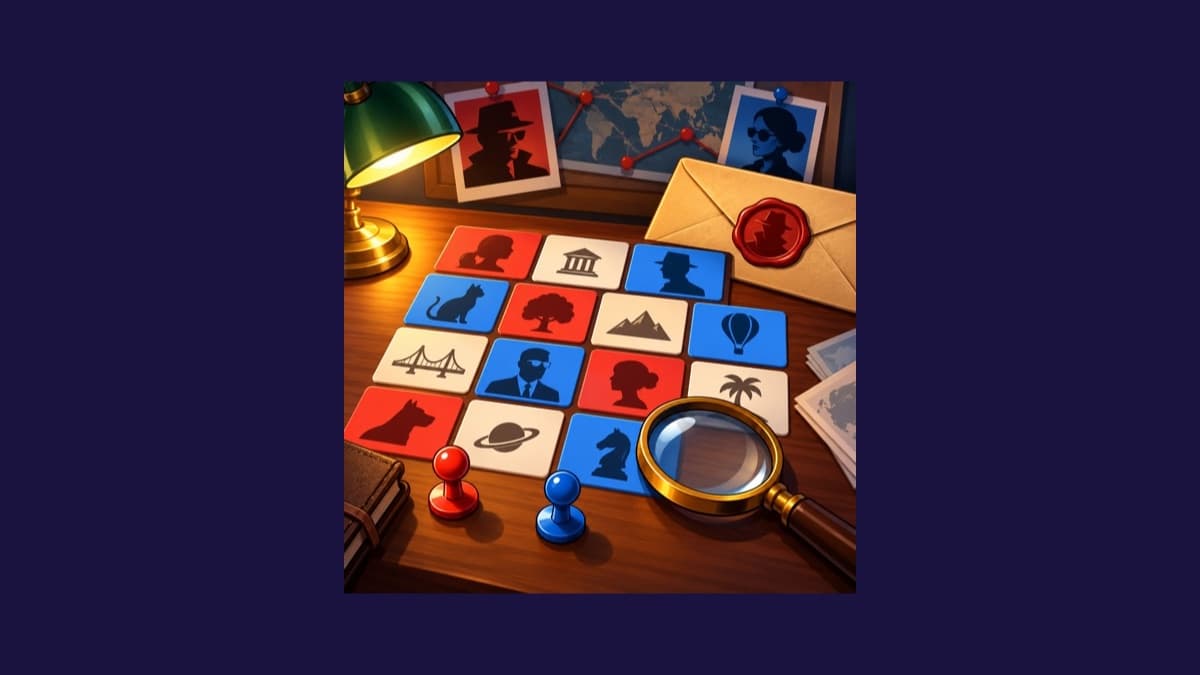
Codenames is Vlaada Chvátil's game, published by Czech Games Edition, and the publisher runs an official browser version at codenames.game. You type a nickname, share the room's link and play. It has Duet, the two-player co-operative version, and you can add your own word packs. If what you want is Codenames, the real thing, start there.
PartyDen's Codenames is an independent version of the same rules, and PartyDen has no connection to Czech Games Edition. It exists because Codenames is the game a lot of groups end an evening on, and an evening here is usually several games in one room. That's the whole case for it, and it isn't always enough.
What each one does
The table sticks to what each one does today. Neither column is a review of the game, because the game is the same: two teams, a five-by-five grid of words, one-word clues, and the assassin waiting for the worst possible guess.
| Codenames Online | Codenames on PartyDen | |
|---|---|---|
| Made by | Czech Games Edition, the publisher | PartyDen, independently |
| Cost | Free to play | Free |
| Joining | A nickname and the room's link | A name and a six-character code, or the link |
| Two players | Yes, with Duet | No: 4 to 10 players |
| Your own words | Yes, with custom word packs | No, a built-in list of about 300 |
| Teams and spymasters | Chosen by the players | Dealt at random when the game starts |
| Other games in the room | No, it is Codenames | Yes, any of the others, without a new link |
When ours is the easier choice
When Codenames is one game in a longer night. If the room has already played Think Alike and a round of something loud, everyone is in a PartyDen room already. Moving to Codenames there takes the host a couple of taps, and nobody has to open a new link or type their name again. That sounds small, and it's exactly the point where half a video call drifts off.
When you want the board on a television. Codenames has a TV view here: the grid goes on the big screen, the spymasters keep the key on their own phones, and the rest of the room argues at the TV rather than into their hands. Because the key only ever reaches the spymasters' phones, the television can't give it away.
When nobody wants to choose. Teams and spymasters are dealt at random, which ends the two minutes of "you do it, no, you do it" that a new group spends before the first clue. It's also the main thing a regular group will dislike, which is the next section.
When it isn't
When there are two of you. Our version needs two teams, so four people at the least. Duet, on the official site, is the co-operative version for exactly two players and it's an excellent game in its own right.
When your group plays every week. A regular group wants its own words, its own in-jokes on the board, and a say in who gives the clues. The official site does all three and ours does none of them.
And when you can buy the box. The people who designed Codenames are paid when a copy is sold. If it's become your group's game, the boxed version on the table is better than any screen, and it's how the next game they make gets made.
If Codenames is the hard sell
Some groups bounce off Codenames because the spymaster job is lonely and the operatives wait a lot. Three games here keep the word association and drop the waiting.
One Clue is co-operative: everyone writes one word for a single guesser, and any word two people wrote is thrown away before they see it. Sixteen puts sixteen words on a shared grid and asks the whole room to find the four hidden groups together, which turns the argument into the game. Think Alike is the gentlest of the three, and it's the one to start with if the group has never played a word game.
We've done the same kind of comparison for Jackbox and for skribbl.io.
The games in this post
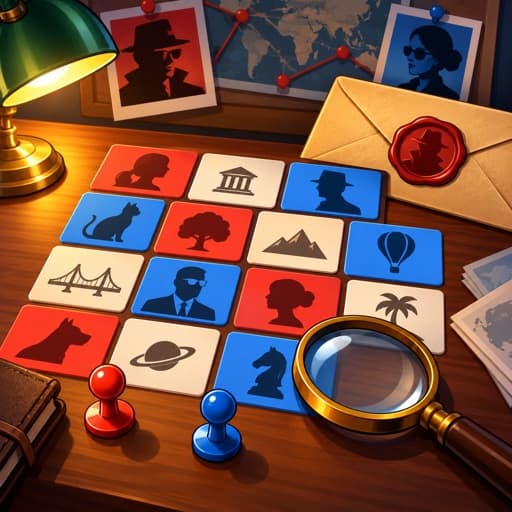
Codenames
Spymasters give one-word clues for their secret agents.
- Call friendly
One Clue
Everyone writes one clue for the guesser — and every duplicate is thrown away.
- Call friendly
Sixteen
Sixteen words, four hidden groups, four lives. Argue it out together.
- Call friendly
Think Alike
Write what everyone else is writing — being obvious is the whole skill.
- Call friendly
More like these on Word Games.
Free tools for these games
Ready to try it?
Start a room in a few taps. No account, nothing to install.